
Chinese food preparation methods
Chinese food recipes, naturally, start with a set of ingredients found in Cantonese, Szechuan and other provincial styles.
But the methods often migrate across borders. And, in a country as large and varied as China, that can be a long way.
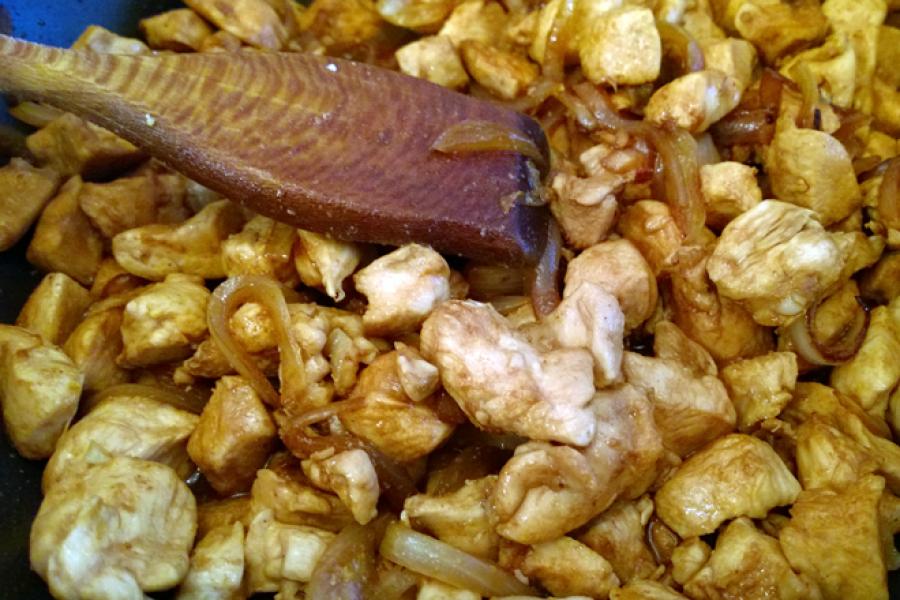
Stir Frying
Stir frying is one of the most popular techniques. A little sesame oil, a wok and some ingredients and you're already well on your way. Of course, like any cooking method, it takes practice, practice, practice. The key is speed. Woks cook very fast in hot oil so all the ingredients have to be ready to use in an instant.
Everything must be pre-sliced, pre-diced and pre-shredded. All the spices should be arrayed with lids off and be ready to shake. An easy-to-use timer should be within easy reach. A towel, some hot pads and quick reflexes are a must.
Stewing
Stewing provides for a somewhat less chaotic cooking experience. A crock pot is filled with chicken or other meat. Then, lots of water, a little wine and many spices are added for individual recipes. One of the most delightful offshoots of this style is the chance to create thickened sauces that compliment the stewed dish. Cornstarch is a common additive, but beer often plays a part, as well.
A clay pot heated by a charcoal fire is a traditional stewing scenario. Stewed for hours this way meats come out tender and juicy. At the same time the broth that results provides a liquid that can be used to enhance a dozen other aspects of the meal.
One common and delightful category is known as 'red cooking'. The name comes from the color produced by using soy sauce liberally. The dish may be simmered for hours with the soy wending its way through meat and vegetables to provide a tangy and nutritious meal.
Roasting
Frequently used by restaurants, a fine Chinese roast is the equal of its Western cousin. In this technique, a large piece of meat is marinated -often overnight- then roasted over direct heat. Whether barbecued or oven-roasted, the results can be among the finest dishes served. The key, of course, is to have an excellent marinade.
Chinese chefs excel in this regard. Seasonings, such as five spice powder that make free use of chili peppers -including the skin and seeds, dried and ground- are often the fundamental secret. Garlic is another common additive. Ginger frequently makes its way into a fine Chinese marinade.
All methods are good
Whatever technique is employed, the same attention to detail both in preparation and presentation are ever present in Chinese cooking. Chinese recipes are a delight to the eye, nose and palate equally.
Chinese cooks take time to prepare the food Their techniques require patience and attention to detail.
The art of dining Chinese style